Today I have something kind of “unwestern-y” to blog about–it’s a short story of mine called TO MAKE THE MAGIC LAST. It first appeared in an anthology put out by VICTORY TALES PRESS last summer called A SUMMER COLLECTION. All the stories in the collection took place in the summer, but they could have been during any time period. Mine, I decided, would take place in a contemporary setting.
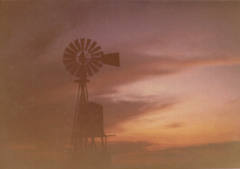
In Oklahoma where I live is part of the area known as “tornado alley.” The story opens with a newly divorced police officer starting down the stairs of his apartment building with the tornado sirens wailing in the distance. All in a day’s work for a police officer in Oklahoma City, but the excitement is only just beginning on this very unusual day. Who would ever expect to find love in the middle of Latino gang warfare and a tornado?
I was so pleased that my story was included in one of the very first anthologies that VICTORY TALES PRESS put out, and I can’t say enough good things about Rebecca Vickery and her up-and-coming publishing company. TO MAKE THE MAGIC LAST also appears now as a “stand alone” short story in one of the VTP imprint companies.
One thing that is very exciting to me about this story is that my daughter created the cover for the e-book stand alone version. I have several new releases heading your way over this summer, and wanted to start by showcasing this short story, the only non-western one of the bunch!
I will be giving away 2 copies of TO MAKE THE MAGIC LAST–all you have to do is leave a comment. Please check back tomorrow evening to see who the winners are! I hope you enjoy!
The set up:
To Make the Magic Last
Police officer, Steve Cooper, heads out for work one morning just as the city’s tornado sirens blast a warning. In the stairwell he runs into a different situation—a gang war in his apartment building. Shots ring out and Steve catches a bullet. Seriously injured, he pushes the beautiful woman who has come through the door behind him back toward safety.
Christy Reed, his enchanting new neighbor, pulls him into her apartment and attempts to stop the bleeding. Recently arrived from Mississippi, Christy has no idea what the sirens and gunfire mean, but she knows enough to be terrified.
The phone lines aren’t working and the storm is bearing down. They take refuge in the bathroom as the sound of a freight train roars over the building. Through the pain, Steve finds himself drawn to Christy. There’s some sort of magic about her. Christy feels the same about Steve. He’s the man she’s always dreamed of meeting.
When the building collapses around them and they meet the gunmen once more, will Steve and Christy have what it takes to help each other through this? Can they make the magic last?
EXCERPT FROM “TO MAKE THE MAGIC LAST”:
The wind was roaring outside, deafening even in the small bathroom. They were practically yelling to be heard above the storm.
Hesitantly, Christy crawled over the side of the tub, careful of where she placed her hands. Finally, his good arm came around her in a strong embrace, pulling her down flush with his body until she lay on top of him. She tried to hold herself away from his shoulder, but he drew her down, tucking her head beneath his chin, and she reached to pull the comforter around them.
Steve could feel her shaking as she lay down. She was more afraid of the storm than the gunmen, it seemed. But as soon as he thought it, she asked, “Do you think they were after you, or just anyone who came down the stairwell?”
Her breath was warm against his neck, the comforter enveloping them in a cocoon of false security. The wind roared outside, deafening in the small bathroom. There was a high-pitched sound of rending metal, the heavy clunking noise of tearing wood, and Steve knew the roof of the building was gone.
Christy gasped, pressing closer into his chest. He patted her awkwardly, his arm at an odd angle. After a moment, he answered her question. “Neither. They were after each other.” They’d been yelling at each other in Spanish, he remembered. He had just happened to walk into the middle of rival Latino gang warfare, ongoing in this neighborhood, day and night. What was a girl like Christy doing in this area? “Right now, this storm is more of a threat.”
She had stopped shaking despite the fact the storm still blew with wild strength outside. She seemed to have forgotten it, lying so close to him. But he knew they were still in terrible danger, and he might not get the chance to tell her what he needed to say if he waited.
A long moment of silence hung between them, the only sound the worsening storm outside. “Christy.” He touched her arm again, and she glanced up. “Thanks for trying to . . . help me.”
“I didn’t do anything.”
Her voice sounded muffled, he thought. Like she was crying, and trying to hide it. “Sure you did.” The comforter was soft. The bleeding was stopped. And, Steve decided, he loved the feel of Christy Reed’s body on his, warm and curvy, and more comforting than that damn piece of down-filled material ever could be.
Her fingers slowly curled into the folds of his once-starched uniform, then settled against the soft cotton tee shirt.
“You’re doing it . . . even now, sweetheart.”
Slowly, she lifted her head and met his eyes in the dark haven they’d made. “Steve—” she broke off, raking her teeth over her bottom lip quickly, nervously.
He smiled at that habit of hers, thinking how he’d like to kiss her; how he wished he knew her better; how it would seem to her if he even . . .
Hell with it. He pulled her to him slowly, her lips coming across his, warm and sweet and soft as the brush of butterfly wings. Uncertainly, she tasted his mouth, and he opened for her, letting her explore him. Her right hand moved to his jawline, her thumb skimming his cheekbone before her fingers found their way to thread through his hair.
“What’s happening to us?” she murmured, drawing back slowly to look at him.
Her voice was quiet and low, and Steve realized that they must be in the eye of the storm. There was no sound but the rain now, and far away in the distance, the wail of a siren somewhere. “Magic,” he whispered, believing it himself. He’d never felt so protective of any other woman—even Lacey. Christy needed him, but she was a giver, too.
She shook her head and lay back down against his chest. “Magic always fades away.”
Not this time, he wanted to say. But he was too exhausted to form the words. Instead, his hand drifted to her short curls, tangling gently there, finding comfort in the clean softness. She’d been hurt before, he knew; he could hear it in her voice. He wanted to know who…and why. But he couldn’t ask—not right now. He couldn’t keep himself awake. “Christy, I’m . . . so tired.”
There was a long pause. He knew she was afraid, not only of the storm and the predators, but also of what was happening—the magic they’d made so suddenly, the fire that had kindled so unexpectedly between them. He wouldn’t let it disappear, he thought fiercely. She was something special—he could feel that already. Something worth holding onto.“I know, darling,” she whispered finally. “Just rest, okay? I’ll be here when you wake up.”
http://www.amazon.com/-/e/B002JV8GUE
http://victorytalespress.yolasite.com/online-store.php